Broken or worn components
Start with an original part, a clear failure area and the functional relationship that needs to be restored.
HOME / APPLICATIONS / CUSTOM REPLACEMENT PARTS
REPLACEMENT PART REVIEW & SMALL-BATCH SUPPLY
When an essential plastic component is no longer available, begin with the evidence you have. We help maintenance teams, equipment suppliers and buyers assess a practical route from an original part or reference to a testable replacement.
1 PC TO TEST. 100+ TO REPLACE.
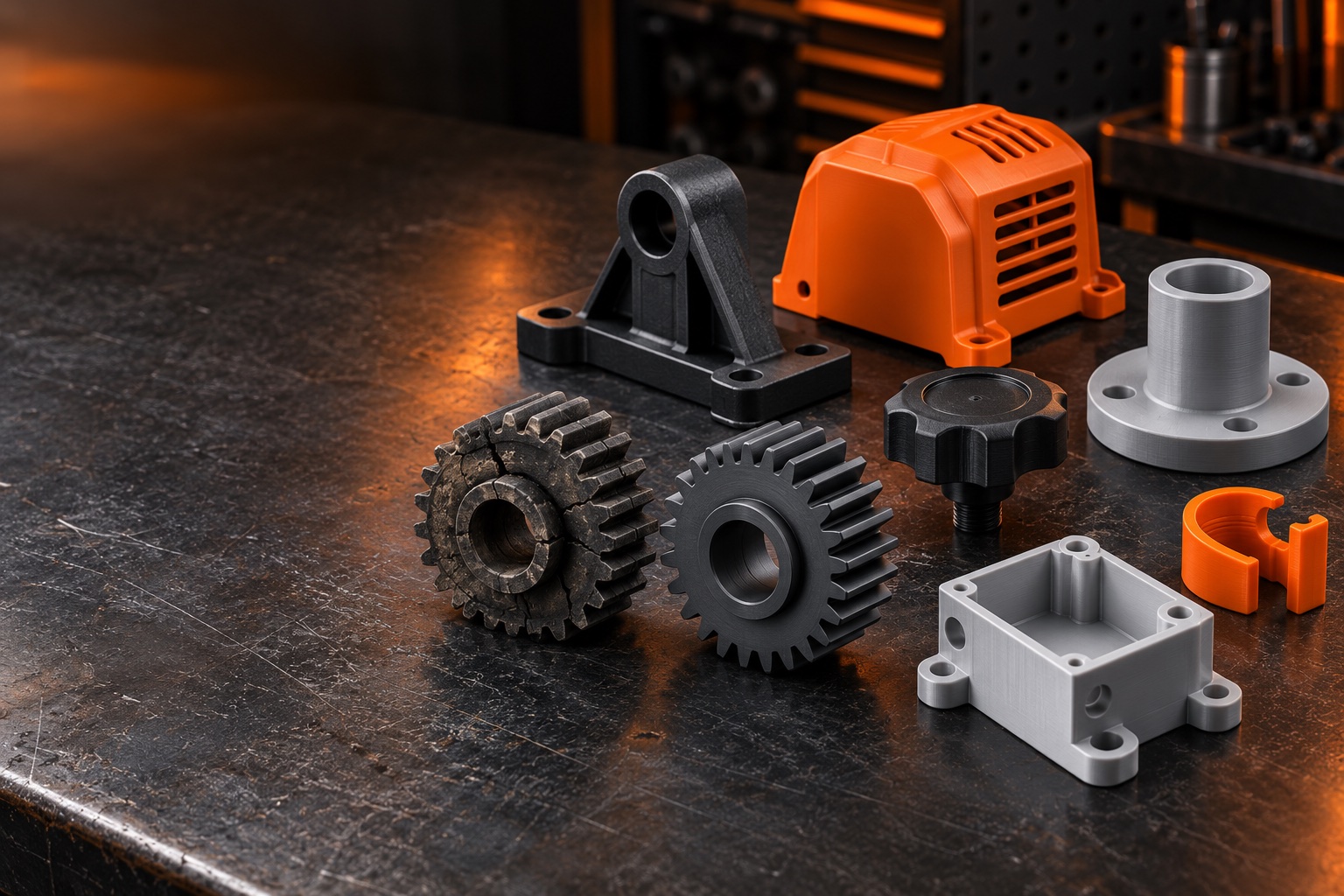
01 / WHEN THE ORIGINAL PART IS THE PROBLEM
A replacement project is not simply a print request. It begins with what the original part does, the conditions it sees and what must be proven before it goes back into service.
Start with an original part, a clear failure area and the functional relationship that needs to be restored.
Explore a practical replacement route when an OEM part is unavailable, delayed or no longer supplied.
Make a first test part, then plan a measured backup quantity for maintenance, service or repair work.
Dimensions, interfaces, material direction and operating conditions all need review before the part is relied on.
02 / WHAT WE CAN ASSESS
These are examples of non-safety-critical polymer parts that can be reviewed. The actual geometry, material and working environment determine whether a replacement route is appropriate.
Low-load drive parts, protective covers and related components where fit and material suitability can be evaluated.
Equipment brackets, locating features, clips and mounts that hold non-safety-critical assemblies in place.
Protective housings, access covers, panels and enclosures for machinery or equipment service.
Hand-operated controls, caps, handles and ergonomic components that need a particular fit or feel.
Small joining features and retention details, reviewed around the original use and required flexibility.
Custom interface parts and service fixtures used to support maintenance, setup and non-standard connections.
03 / REPLACEMENT SCENARIOS
Common starting points include a worn gear, an unavailable enclosure or a component set that needs a dimensional review. Fit, material, load and operating conditions are assessed for every application.
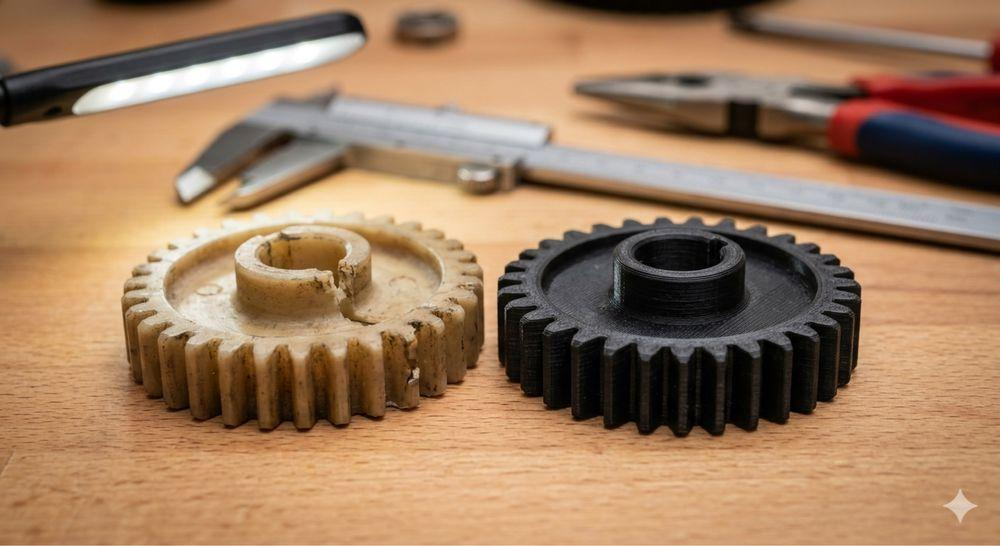
A first part helps verify the interfaces, geometry and intended use before any replacement quantity is considered.
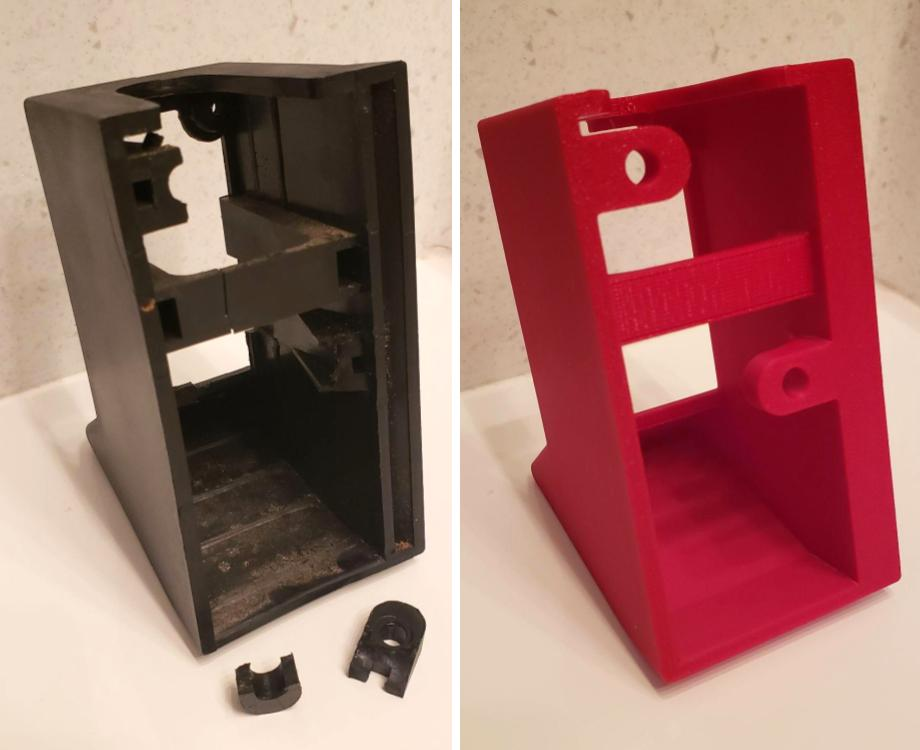
Openings, locating details, clips and internal clearances need to be reviewed around the actual assembly.
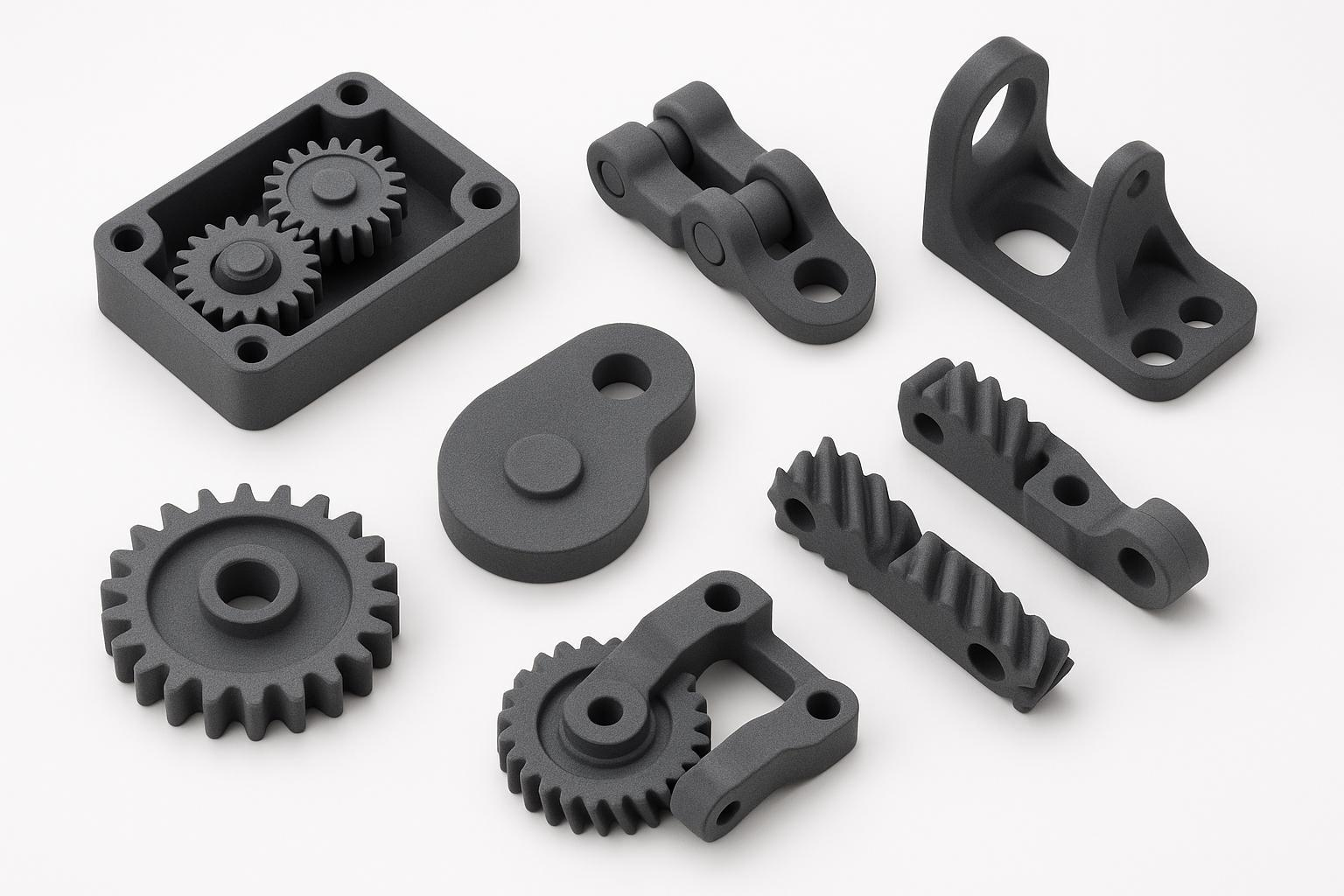
Related components can be evaluated as a set when an equipment repair depends on how parts fit together.
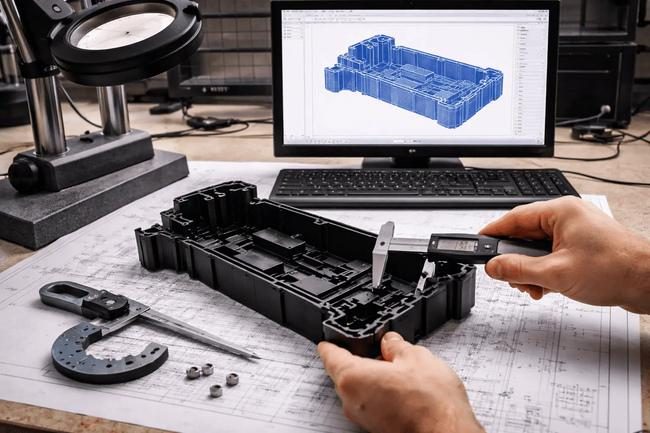
Clear photos, key dimensions, drawings or a physical sample can support a feasibility review when no CAD file exists.
Illustrative replacement-part scenarios. Every project is subject to application, material and fit review before production.
03 / NO CAD FILE? START WITH THE PART
A CAD file is helpful, but it is not the only way to begin. Photographs, a drawing with dimensions or a physical sample can help establish whether reverse modeling and a first replacement sample are feasible.
Send Part Details →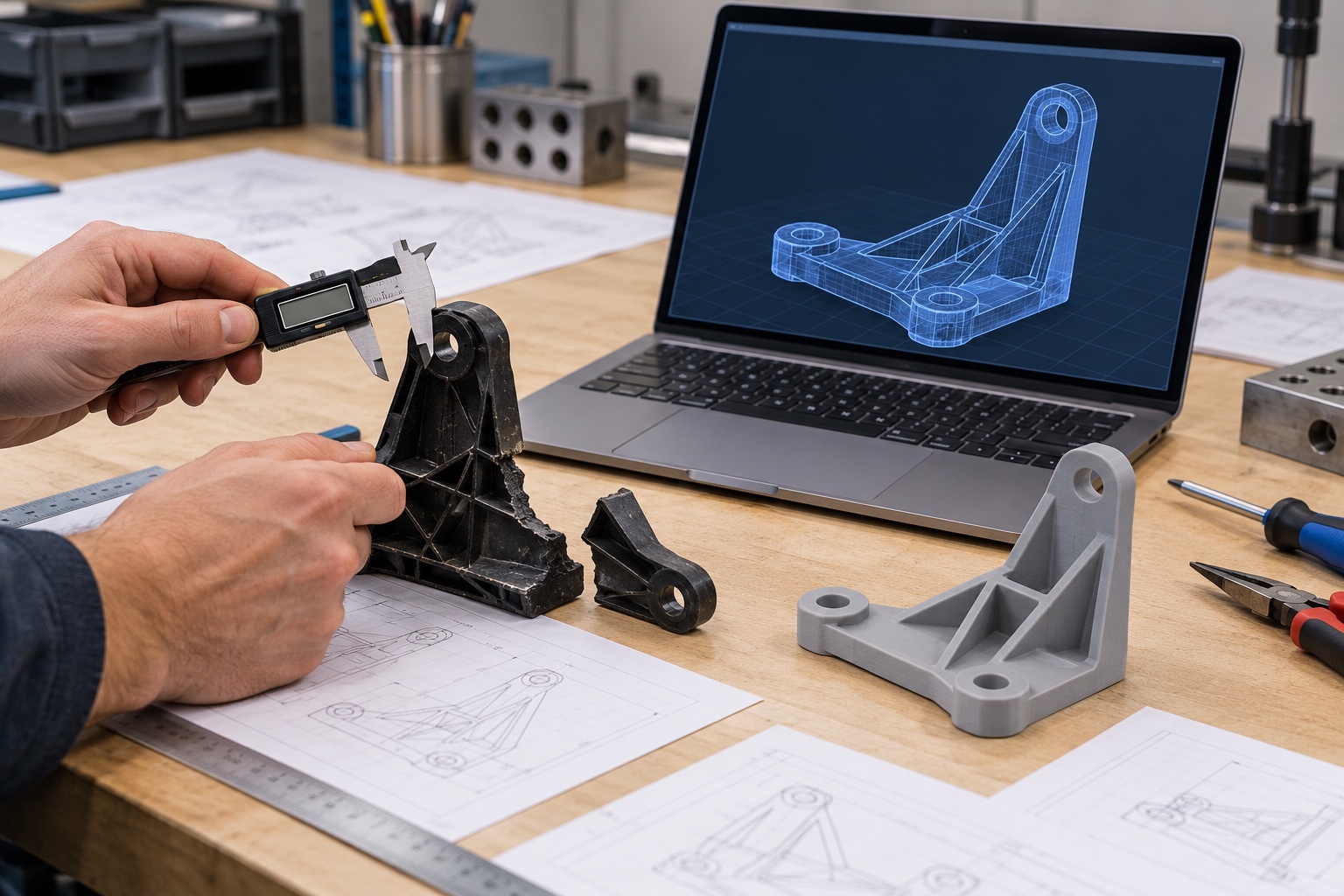
Send photos, a drawing, dimensions or clear details about the part's role. A physical sample can be discussed when further assessment is needed.
We review visible geometry, interfaces, intended use, material direction and whether the available evidence supports a practical model.
Build a part for fit, assembly and application review before assuming the replacement is ready for broader use.
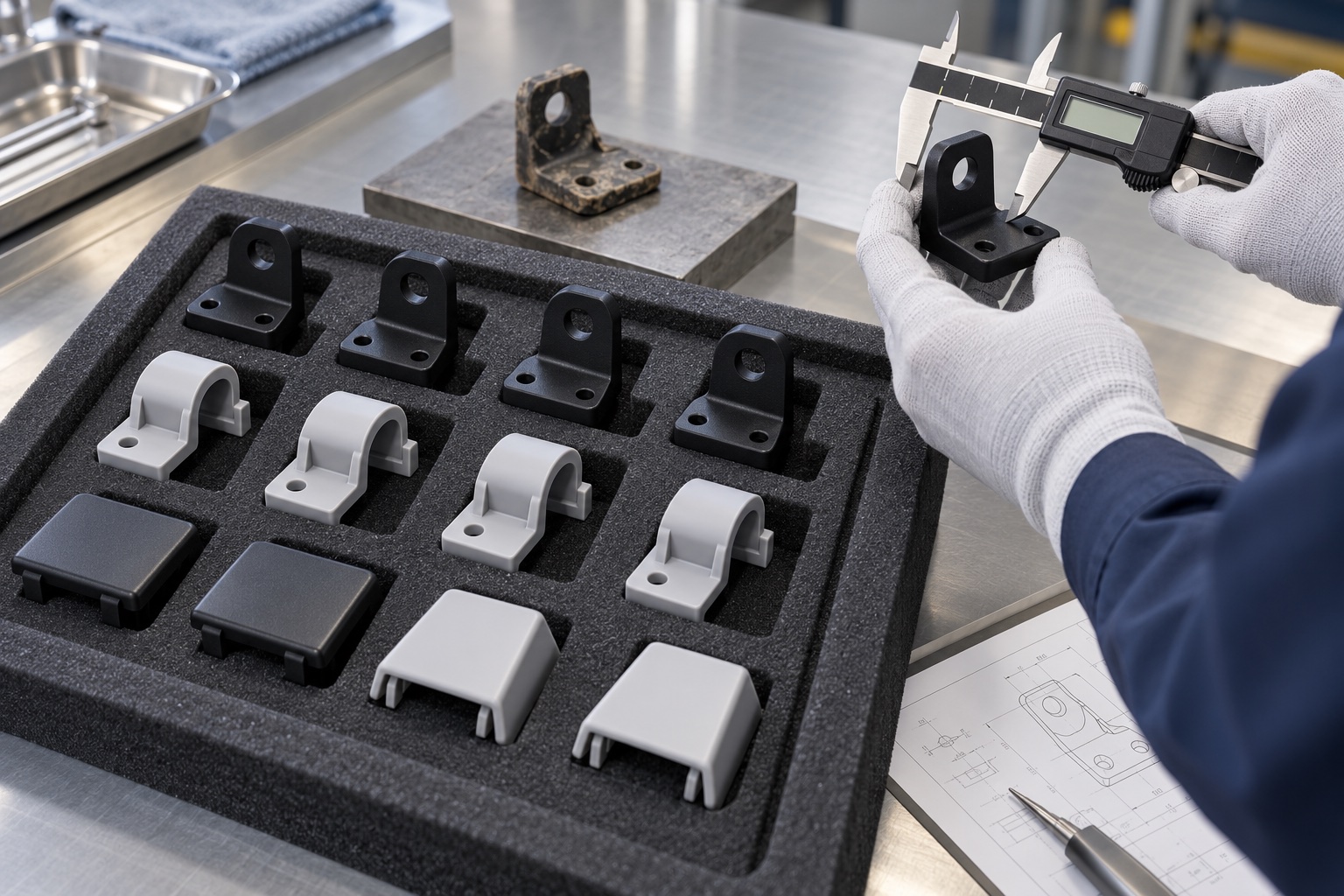
When the sample is approved, define the small-batch quantity, inspection needs and delivery plan around the actual use.
04 / VALIDATE ONCE, REPLACE WHEN READY
A first sample gives the project a physical reference point. It lets the team check what can be checked in the real setting, then decide whether a replacement stock quantity is useful.
05 / WHAT TO SEND FOR A REVIEW
The more clearly the original use is described, the better we can determine whether a practical replacement route exists. A complete engineering package is not required to start.
A name, short description, the failed area and a clear photo of the original part if available.
CAD, drawing, dimensions, reference photos or a physical sample that can be discussed for assessment.
Its equipment, interface, load, temperature, chemical exposure and other working conditions that affect suitability.
One first test part, a small maintenance set or an ongoing replacement quantity.
IMPORTANT / APPLICATION LIMITS
A reproduced part should not be assumed to be interchangeable with the original. Safety-critical, regulated or high-consequence applications—such as braking, structural load-bearing, pressure-containing, electrical safety or medical uses—need qualified engineering, testing and any required approvals.
We will review the application information you provide, but a first sample is not an authorization to use an unvalidated part in a safety-critical system.
06 / REPLACEMENT PART FAQ
Yes. A drawing, clear photographs with dimensions or a physical sample can be a starting point. We first review whether the visible geometry, condition, material needs and intended use provide enough information for a practical modeling and prototype route.
Not automatically. A replacement must be assessed for dimensions, original function, material, load, heat, environmental exposure and fit with the surrounding assembly. The first sample is used to validate the proposed route before a broader quantity is planned.
Safety-critical, regulated or high-consequence parts require qualified engineering, application-specific testing and appropriate approvals. Forgeway does not recommend using an unvalidated reproduced part in a safety-critical application.
Yes. After the first part has been reviewed, a measured small batch can be planned around the approved geometry, material, finish, inspection points and intended use.
START A REPLACEMENT-PART REVIEW
Send a photo, drawing, CAD file or a description of the original part. The replacement inquiry form will ask about the original use, available evidence and quantity so we can review the right next step.
Request a Replacement Quote ↗Photos · CAD · Drawings · Dimensions · Original-sample discussion